
Who and when have created the Kamasutra?
The Kamasutra was written in Sanskrit by the philosopher and scientist of ancient India Vatsyayana Mallanaga. However, despite the fact, it will be incorrectly to name him the author as he performed in the role of compiler of the knowledge which had been collected earlier. That means that he compiled all the works written earlier on this subject by other authors, he rewrote and systematized them and represented the knowledge in more scientific form in his book with the title the “Kamasutra”. It can be certified by the constant references of the author through the text on other resources, such as “Rules of love” or “Kama Shastra”, which was created approximately in the VII century before the Common Era and other, which were the sources for any given information. In other words, this book is nothing else but a finished and correctly compiled collection of previous works. However, it is doubtless that in the book we can find definitely distinctive approach of the author, his style and manner of writing.
Who was Vatsyayana Mallanaga
If we speak about life and destiny of Vatsyayana Mallanaga we may say that there is almost nothing about this person in the history. The only thing we know is that they suppose that by his origin he was from the South-West India and lived in the city of Khajuraho (that is where we can find amazing temples decorated with erotic sculptures) in the III-V century of Common Era in the times of ruling of Gupts dynasty (it is indicated by the events of those times described in the book). It is right with the ruling of the dynasty that is associated the dawn of the Indian literature and architecture. So, creation of the Kama Sutra is attributed right to this period.
What did the author try to import to the Kamasutra
Vatsyayana Mallanaga did not intend to write any pornographic book about sex. Vise versa, he planned and accomplished a serious work, a study about how to act to reach sensual happiness, i.e. Kama. The book describes everything that is necessary to know for reaching such happiness. Here, physical love is compared with scientific perception, perception of the world and themselves. Sexual relationships are a part of any human life, that is a part of experience and wisdom, and when you develop in this direction, it is important and it is absolutely non shameful. Unfortunately, such an approach to this creation is not developed among our contemporaries. Not many people can penetrate to the depth of meanings of this ancient study.
For whom was written the Kamasutra
Initially, the Kamasutra was not destined for wide masses of the Indian population. It was a love guide for the highest casts of the population, that is for educated people, as it systemized and represented right their life in all its extends. It was also allowed to be studied by hetaera and daughters of the senior ranks. If wives, in this case only by permission of husbands. So, only a little part of the whole population had access to the knowledge, exposed in the book. Here are enlighten the question of law, sociology, manners of Indians from different parts of the country, art, love etiquette, culture. We should understand that in India of that time all the created texts executed pedagogical function, it means that they taught, instructed, educated. But after some time, approximately 300 years, the book became more ease of access for common people and most of those who wished could learn the high art of love.
Sexual relations as a part of everyday life as its important part are classified in the book quite widely and closely, that is on types and groups, features and ages of the participants. It is interesting that ancient Indian scientists classified absolutely everything that they were describing in their books. That’s why the “Kama Sutra” with its types of embraces, kisses, caresses and stroking that is a typical creation in the range of other scientific works, which is so serious and deep in its content.
How the Kamasutra became known all over the world?
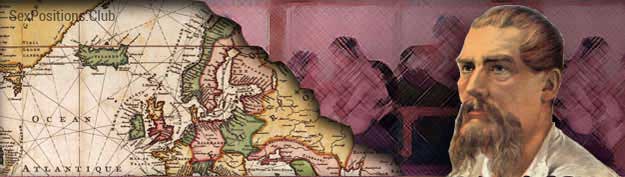
From the time of its creation till the beginning of the XIX century the Kamasutra remained the asset of the exclusively Indian population, and if to be more precise, just of a little its part, in general of the elite (high casts). But it lasted till the moment when India was gradually colonized by English empire in XVIII-XIX centuries. In the process of the colonization, there was active development of territory and culture of the country by English people, and as a result, they discovered many ancient texts, including the Kama Sutra text.
The man who discovered the Kamasutra
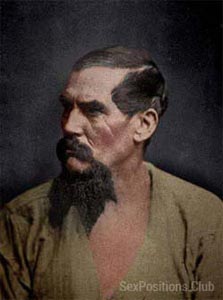
After 10 year in India Richard Burton approved himself to be more linguist, culture expert and researcher than the military man, as a result the Royal geographical society allowed him to leave the service to continue the researches of other countries. Therefore, during the rest of his life Richard Burton was travelling by the world.
How Richard Burton learnt about the Kamasutra
As Burton was a man of quite free views on sexuality, he was also interested in features of sex culture of the Indian population. In 1842 in the city of Bombay, while communicating with a local prostitute he learnt of existence of a special book, which was dedicated the art of love and head the title of the Kamasutra. Is it clear that when he got text of the Kama Sutra for the first time he was very impressed and right at that time he said his famous words: “We British never knew of this kind of love-making. Had we known, we would not have ruined the lives of so many British virgins.”
He understood that this book could not be any more possession of only India; the whole world needed to know about it. During another 10 years, Richard Burton was carrying the sketches of the very first Kamasutra, which Europe was just about to learn. Only in 1871 the speed of his travelling became lower that allowed him to collect his notices which he had collected during dozens of years, to take a pen to expose on a sheet of paper everything that he had learnt about the book during many years. And this became a start point of acquaintance of Europe and then of the whole world with the Kamasutra.
The first edition of the Kamasutra
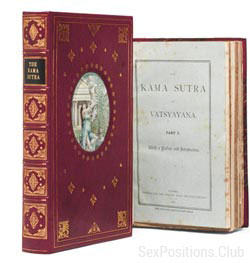
Till present the origin and authenticity of the translation are unknown as Richard Burton didn’t know Sanskrit which was the language of the book. However, there are some assumptions that he translated the book from the translation, which existed at that time into the language that Richard knew.
How the Kamasutra was accepted in Europe
Conservative England greeted the first translation of this book with cold. The laws and public morality were at odds with the content of the Indian tractate, which for that time was considered quite explicit. There were printed only 250 copies. After some time it was considered pornography and was forbidden till 1963. After the Second World War with growing of a new generation and changing standards and values in Europe started the sex revolution which put ease the society from its sexual side. It gave the translation of the Kamasutra a new fresh breath. The book was again allowed to be printed. The new generation was released from any prejudices, rules, and interdictions in sex and met the book with great interest and love, and very soon it was called the “Bible of sex”.
Why and how the Kama Sutra became so popular in the world?
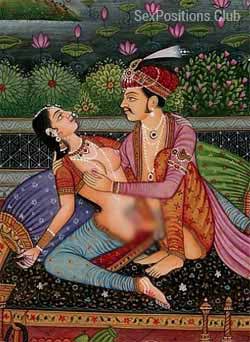
After that, since 1970 there started an active porn industry, which also caught up and started to develop actively brand of the Kamasutra in the whole world, making different films and educational manuals on sex positions. As a result, among many people, name of the book is associated exclusively with sex positions. Through the years, popularity of the book was growing as well as demand for educative literature about sex. Thus the Kama Sutra is known nowadays.
What does the Kamasutra tell us about sex
What does sex mean. The Kamasutra interprets sex as a special feature in a result of which the male and female principles are to become one not only on the skin-to-skin, but also on a spiritual level. Sex represents not only a physical process, how many people may think; this is a process that engages body, feelings, emotions, sense of those who are in love with each other. It is a sensual game, in the terms of which the woman turns out to be a goddess, a favourite and desired one, and the man, in his turn, gets satisfaction having reached an orgasm not just by himself, but by his beloved woman.
What should a sex be consisted of. The Kamasutra is a tool with the help of which sex may turn out to have a sacramental sense, including our feelings and perception aimed at getting the most enjoyment. Thus, every feature, e.g. scents, surrounding, lightening etc, are to be full of intimacy, hinting at forthcoming act of love. A couple should get rid of everything out of their room, leaving behind all the worries. Here, there is enough room only for their mind, soul and body: only he and she do matter now. The prelude, or a sexual game, has to be in the highlight of such a ritual. Remaining an integral part of the game, while prelude, one is able to express all the emotions and love to which the author of the book pays great attention. The sex itself, actually, is the high point of this game. Even in some cases, there is no need for having sex.
Sex techniques. All the necessary information referring to the theme is given in the chapter 5. As outlined previously, the positions in the Kama Sutra are called “the arts”. In total, the author observes 8 main arts, each of which has 8 variants. Stated another way, the book contains 65 sex positions. All the positions are described in the second chapter named “Of love coition”. Sometimes, only this chapter is considered to represent the whole book. It is used to publish the text incorrectly, without paying any attention to the authentic translation. Also, the book provides the information of three existing types of men and women, eight variants of hugging, eight hoots, ten kinds of love and so on: one should observe a numeric symbolism almost in everything. Main numbers are three, eight, and those divisible by them. Most of the classifications used by the author are still up-to-date and spark interest even nowadays.
The Kamasutra nowadays
Curious enough, but in our times it is quite common practice to consider any collection of sex positions as “The Kama Sutra”. It does matter little to almost everyone that the original treatise introduces a lot more than it may seem to present at the back of its title. If you want to receive more than just a set of sex positions, I advise you to have a look at the original translation of this book. Being a genuine object of great value, lots of modern couples may find out many needy information. The book teach you the following essential thing:
Feel your partner’s pleasure as well as your own.
Having opened the doors of “Kama”, the ability to feel each other provides both partners with a sense of happiness and real desire.
In conclusion, we would like to say that the greatest myth related to sex is a belief that the more sex positions you know, the better lover you are. This is exactly not true. According to women and other specialists, no matter how many positions one may know, the only thing that does matter is your emotions both partners experience while having sex. Nevertheless, skilfulness and understanding how to use sex positions also plays a great role. And remember the main ordnance given by the author of the Kamasutra:
There is no happiness being in love affair if only one gets pleasure.
Kamasutra positions:
Nowadays, no matter what social background an individual may have, to what gender identity or confession one may belong to, or how many years she or he has, – almost everyone’s heard of the Kamasutra. Still anyone may wonder, what the “mysterious” book means in the terms of daily life. Is it true, that the only thing mentioned in the Kama Sutra and may be useful for a couple is just a number of sex positions? No way. Sure enough, it contains the chapters which provide a profound perception not only of the art of sexual relationships, but also of a very core of the spiritual affinity of the two base principles. Moreover, it is possible to receive a straight answer on a cordial question related to a relationship between man and woman. Additionally, the book provides an opportunity to see your life partner in a different light and find common ground that will help any couple to be on cloud nine.
As you have already noticed, the sense of this ancient text lies much deeper than anyone could have ever imagined. That’s why, for everyone interested in such an amazing historical piece of art, we have decided to set up the site, where we gathered and systematized the information related to the book, making it loud and simple. Having read the article, you will discover the most important and interesting features concerning the Kamasutra, as follows:
The Kamasutra. What is it?
The Kama Sutra is a scientific treatise about experience of true love, aimed to settle and harmonize a multi-level relationship a woman and a man may have, starting from every day’s life to intimate and inwardness of their match, providing the reaching of Kama (sensual satisfaction).
Introducing a thorough and serious investigation, the text provides a deep reader not only with ability to know a true meaning of love between man and woman, but also opens the mind to a better understanding of human nature along with his or her partner one.
What does the word “Kamasutra” mean
According to the literal translation from Sanskrit, “Kama Sutra” stands for “the Rule Book of Kama” or “Theory of Kama”. Therefore a question appears, what does the Kama mean to us and what is the purpose of it? Kama is a sensual part of life that consists of physical and emotional pleasure. The point is that Indian culture emphasizes four main virtues, e.g. four main life goals which an average Indian should gain
- Kama represents a sensuous aspect of life that unveils a physical and emotional enjoyment.
- Artha stands for cognition, competence, material prosperity, glory and power.
- Dharma means morality and wisdom.
- Moksha gives liberation.
If there is no love found, you will never gain any satisfaction that a sexual relationship may bring about, neither will you make the chakres to be full of warmness and languor full, nor will you ever relieve your body of desire of love. The only thing you get – is a waste of your time.
The Kamasutra makes it clearly that without respect, love, tenderness and enamourment any of the sexual positions turns out to be just a simple repletion of somebody’s wants, such as to have a breakfast, ease oneself or drink water. Such closeness, sooner or later, will mean nothing, no matter who it is, a man or a woman. As a flower being planted into the fertile ground and warmed by the sunshine can delight the eye, so the sexual relationship, being warmed and saturated with emotional appeal and closeness will get you on cloud nine. For the sake of it, one could learn and try all the Kama Sutra’s positions, which will probably bring freshness to your sexual life, bearing great fruits, the main fruit of your mutual love – children.
Myths of the Kamasutra
- This book is about sexual pleasure (the compendium of sex positions). Only 20 % of the text contains a description of the particular sex positions. The rest tells us about a deliberate and general investigation of genders in their mere diversity. The ancient author’s life views, a travelling monk, still are the similar to the modern ones.
- The Kamasutra contains pictures. It should be noted, that the book contains almost none of the original illustrations. Everything, that a single publication may propose, is just a simple fake. Those images appeared in the book on their way to Europe. Frequently, instead of illustrations, a reader sees some samples of the Mongolian pictorial art. You can read more about the features that caused such a delusion here.
- It is the only book dedicated to the art of love of that time. In deed and not in name, as we have already mentioned, the Kamasutra represents not an original piece of work, but a compilation and revision of previously existing texts written by other authors on the topic. It is evident through the repeated references in the text of the Kama Sutra made to the various authors, in particular, Shatavahana and many others. A while later, some of not less important, but lesser known works were made. They were written by Indian philosophers, who either do warrant attention: Ananga Ranga, Ratirahasya , (Kāmashastra).
- Part 1: Introductory – represents an introduction, where are given general meanings of what love and closeness is, what does love mean either for a woman and a man, with further classification of women and men and their genitals.
- Part 2: On Sexual Union – This chapter examines different types of kisses and preludes. In addition, the chapter describes a number of the Kama Sutra sex positions and the influence made by them according to the deepness of an orgasm felt by either a woman or a man. Also, one can find information about paraphilia (experiencing of intense sexual arousal by unusual sexual interests or using culturally inadmissible ways) and love triangle (wife, husband and husband’s lover).
- Part 3: About the Acquisition of a Wife – here a man is provided with some pieces of advice aimed to the most effective searching for his future wife. Moreover, a reader is supplied with several important facts about courting a woman and how to set up a wedding.
- Part 4: About a Wife – This chapter is dedicated to the women, and specifically, how they should behave being a wife.
- Part 5: About the Wives of Other People – The chapter tells us about seduction and allurement of somebody else’s wives.
- Part 6: About Courtesans – This chapter is devoted to prostitutes and their profession.
- Part 7: On The Means of Attracting Others to One’s Self – This chapter includes information about the art of attracting people as well as various substances (aphrodisiacs) that enhance the sexual desire between the lovers.